
Daily Routines · Printable card
A handover card that says what actually happened
A pet care handover card records what was done, when, by whom and anything unusual, so the next caregiver does not have to guess.
 By Marcus Reed, Editor · 2 min read · Published · Updated
When and how to fill in a handover card
A pet care handover card records what was done, when, by whom and anything unusual, so the next caregiver does not have to guess. Fill it out when the task ends, while the details are fresh.
Fill in each line honestly, even when the answer is “nothing to report.” A blank space reads as uncertainty to the next caregiver; a written “no issues” reads as confirmation.
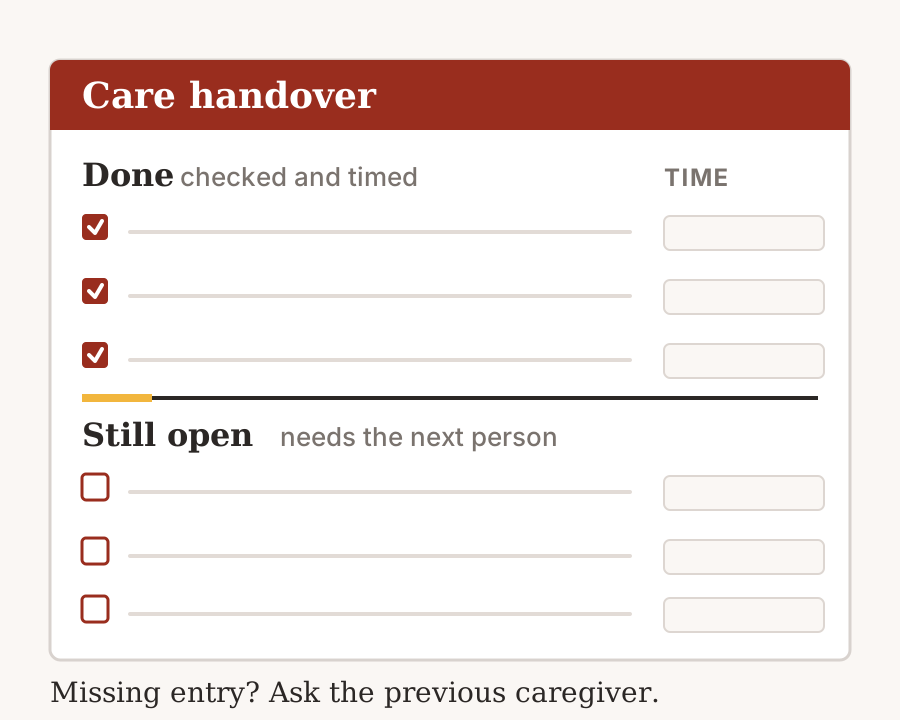
Cover the basics first: what was done, when, and by whom. Then add anything that deviated from the normal routine, like a skipped meal, a shorter walk, or a new behavior worth watching.
Write what you saw, in numbers or plain words, not impressions. “Ate half the usual portion” tells the next person more than “ate a little less than normal.” Use times and plain descriptions you can stand behind.

If medication or a health concern comes up, note only what was observed (refused a dose, seemed uncomfortable after a meal) and leave interpretation to the pet’s veterinarian. The card documents what happened; it doesn’t diagnose it.
Sign or initial each entry so responsibility is clear if a follow-up question comes up later. If an entry is missing, check with the previous caregiver before assuming the task needs doing.
What does a good handover look like on a busy weekday?
Picture a school morning. One parent feeds the dog at 6:45 and heads out. An older child takes the 7:30 walk before the bus. Grandma arrives at noon for the midday visit.
With a card on the counter, each person spends about a minute writing and a minute reading. The parent notes the meal and the time. The child adds the walk and a quick line about a sore-looking paw pad. Grandma reads both entries, checks the paw, and knows exactly where the day stands.
That small routine saves a flurry of texts and lets everyone feel confident about their part.
A quick check before you hand over
- Every task you finished has a time and your initials.
- Anything still open is written as open, with a name beside it.
- Unusual moments are described in plain words the next person can picture.
- The card sits where the next caregiver looks first.
Handover card template to copy
Copy the card below as-is for a single task handover, or repeat the block for multiple tasks completed in one visit.
Pet Caregiver Task Handover Card
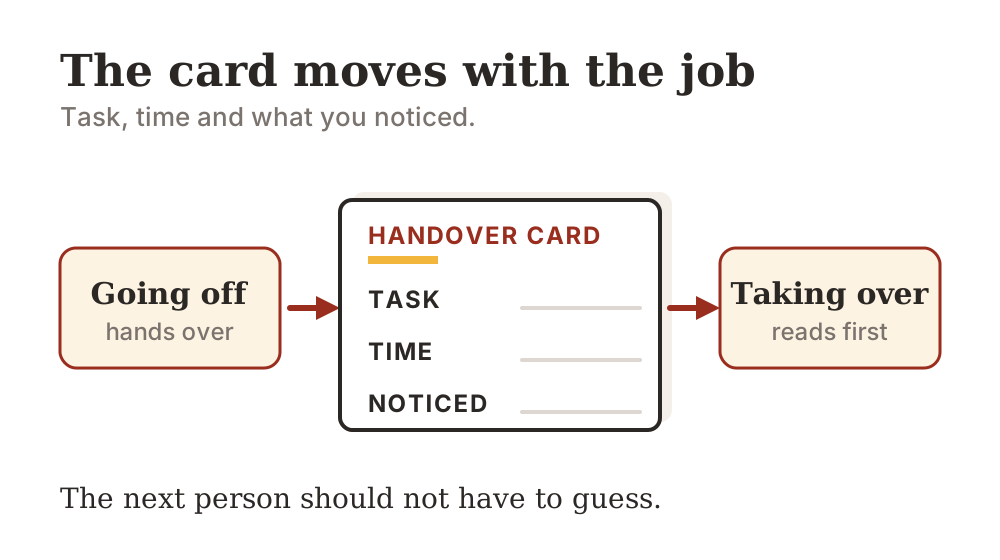
Pet name: _______________________
Date: _______________________
Time task completed: _______________________
Task type (feeding, walk, medication, litter/potty, play, other): _______________________
Details of what was done: _______________________
Amount given/duration (food amount, walk length, dosage as directed): _______________________
Anything unusual observed: _______________________
Follow-up needed (yes/no, and by whom): _______________________
Completed by (name/initials): _______________________
Next caregiver notified? (yes/no, method): _______________________ Example entry: Task type: feeding. Amount given: usual portion offered. Anything unusual observed: ate half the usual portion. Follow-up needed: yes, next caregiver to watch the evening meal.
Print several copies and keep them near the feeding station, leash hook, or medication log so whoever finishes a task can fill one out on the spot. You could keep the cards together on a clipboard or in a small binder near the pet’s supplies.

How do you get the whole household using the card?
Start small and make it fun. Try the card for a single week, and let younger family members decorate the clipboard. Read the week's cards together at Sunday dinner and point out the entries that helped most.
Two easy slips to watch for:
- Writing the card later from memory. A note written on the spot is sharper and quicker.
- Stacking old cards on top of new ones. Keep a small folder for finished days so today's card stays in front.
Within a week or two, the card can start to feel like second nature.
Questions readers ask
What should a pet sitter handover note include?
Include the task, the time it was done, the amount or duration, anything unusual, and who did it. Add any follow-up the next person should handle. Plain words work best. A short, specific note lets the next caregiver pick up the routine with confidence and zero guesswork.
How do families keep track of who fed the dog?
A handover card or feeding log near the food station works beautifully. Each person writes the time and initials right after feeding. Anyone passing by can check it in seconds. It settles the classic “did someone already feed him?” question before it starts.
Should kids fill in the handover card too?
Yes, if they help with pet care, their entries count just as much. Give them a simple version with checkboxes and a line for anything they noticed. Owning a task on paper can feel good for kids. Their notes also give parents a warm window into their day with the dog.