
Useful Gear ·
ChomChom Roller: decide who rolls, who empties and where it belongs
Give each surface one owner who rolls it with short back-and-forth strokes, have the last person to roll empty the chamber into a nearby bin, and keep the roller in one labeled spot near where it is used most.
 By Marcus Reed, Editor · 1 min read · Published · Updated
Start with the surface and the person using it
Give each surface one owner who rolls it with short back-and-forth strokes, have the last person to roll empty the chamber into a nearby bin, and keep the roller in one labeled spot near where it is used most. Assign each surface to a household member before the roller ever comes out. Couches, car interiors, rugs, and bedding collect fur differently, and picking one person per zone keeps the job from becoming everyone’s afterthought and no one’s task.
The person who spends the most time on a given surface is a practical default. Whoever sits on the couch nightly or drives the car daily is already looking at it, and that’s one basis for the assignment. A rotation works too, if that suits your household.

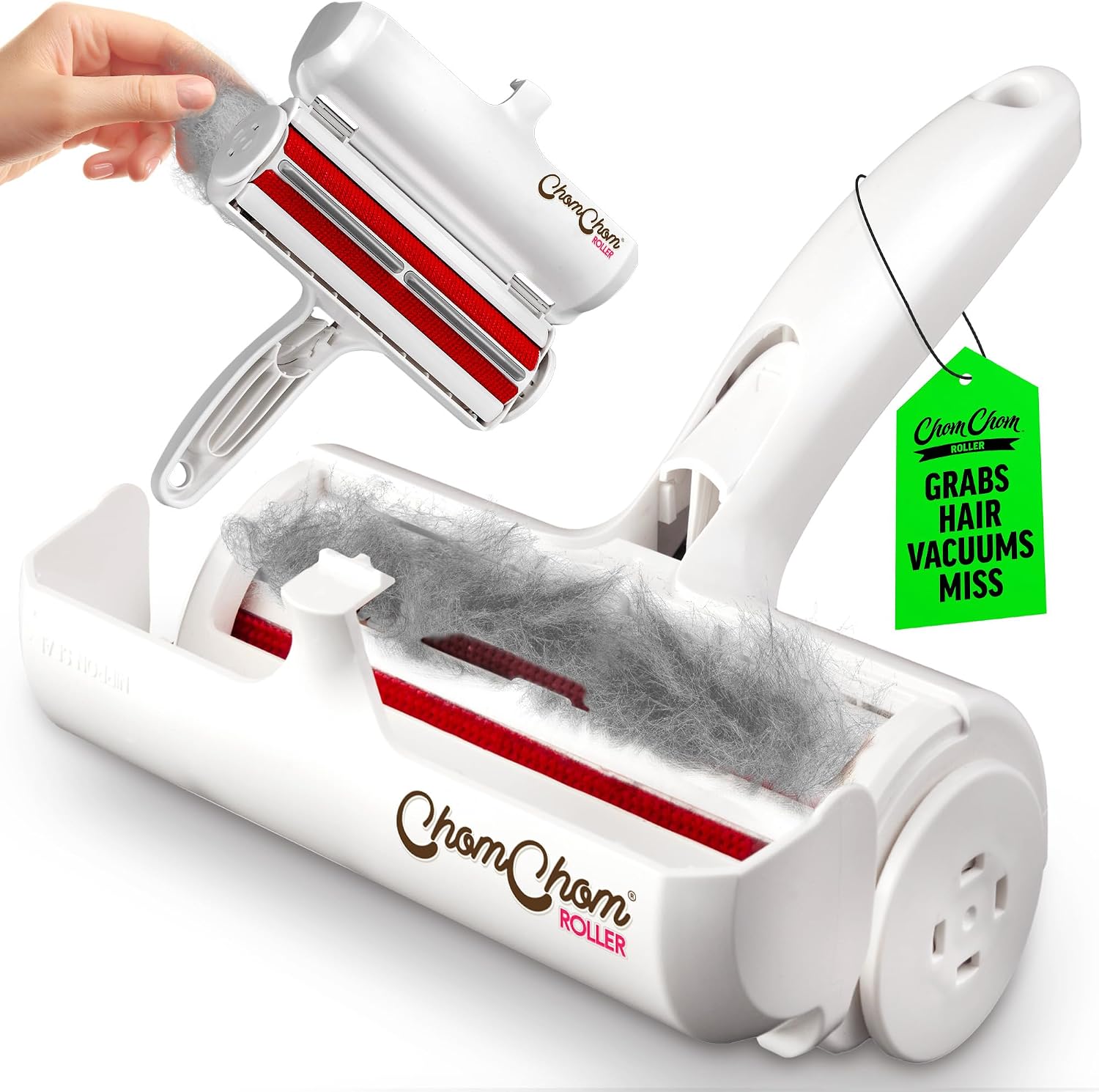
The ChomChom Roller product page describes a manual tool with a collection chamber. The linked Amazon listing identifies a plastic handle and gives dimensions of 2.5 inches deep by 7.5 inches wide by 7.5 inches high. Check one detail before you assign anything: the listing flags that a newer model exists, and the brand’s comparison table shows other variants, including a two-piece set that pairs the 7.5 inch roller with a smaller 6 inch by 3.25 inch travel size. Confirm which one is actually in your house, because a second small roller changes who can keep one in the car.
The listing describes it as manual, with no refills or batteries and no power source required. Nothing has to be charged or plugged in, so outlet access isn’t part of the decision.
Write the assignment down somewhere visible, even briefly. A whiteboard note or a shared chore list turns “someone should do this” into a specific name attached to a specific couch or car seat.
Choose someone who can follow the product’s directions. Being refill-free doesn’t by itself mean a child is ready to use it.
The rolling job
Rolling means moving the tool back and forth across a surface until the visible fur lifts away. The maker’s directions call for short back-and-forth strokes, then emptying the collection chamber with the release button.

Assign the rolling step to whoever owns that surface’s upkeep, whether that’s the primary couch-sitter or the person who drives the car most. Split rolling duty by room or zone. That matches effort to where the fur actually piles up better than a day-of-the-week schedule would.
Show the assigned person the maker’s rolling and emptying directions before handing over the task, and check that they’re comfortable using the tool.
A few things are worth deciding together: which surfaces get rolled every week versus only when the fur is visible, whether the car gets its own turn separate from indoor furniture, and who checks the built-in receptacle before it’s completely full.
The maker lists couches, chairs, carpets, bedding, and car seats among the intended surfaces. That range is exactly why assigning the job by surface keeps it moving. Left as one vague whole-house chore, it stalls.
Treat the rolling assignment as adjustable. If one household member’s surface, say a pet bed, needs more frequent attention than the rest, shift that person’s task list to match it. A rigid rotation that ignores where the fur actually lands just adds friction.
How do you empty a ChomChom Roller?
Emptying is a separate task from rolling, and someone needs to own it specifically. The maker’s instructions describe pressing a button to open the back compartment and discard the collected fur.
Assign emptying to whoever finishes the last rolling pass in a session. That way nobody discovers a full receptacle mid-use. Pairing the emptying step with the end of each session is the handoff that leaves the tool ready for the next round, and it’s why one specific person should own the job every time.
Settle on where the emptied fur goes before you ever use the roller. A small trash bin near wherever the roller is stored gives the person emptying it a clear next step, so no one carries loose fur across the house.
Decide who empties it: the last person to roll, or someone assigned to check at the end of each day. Where the fur goes matters too, whether that’s a bathroom trash can, a kitchen bin, or an outdoor bin. And decide how full the receptacle gets before someone empties it, whether that’s a look-before-you-start habit or an end-of-session check.

A storage place the next person can find
Pick one storage spot and keep the roller there every time, so the next person who needs it doesn’t have to search. The product’s compact dimensions (roughly 2.5 inches deep, 7.5 inches wide, and 7.5 inches tall) mean it fits in a drawer, a closet shelf, or a caddy under a sink without taking up much room.
Choose a location near where it’s used most often. If the couch is the primary target, a nearby drawer or basket makes sense. If the car gets frequent attention, a small bag in the trunk or glove compartment might work better for the car, assuming your household keeps a dedicated roller for vehicle use.

Label the spot if multiple household members share the space, even something as simple as a sticky note on a drawer front. That small step keeps the roller from migrating to a junk drawer where no one thinks to look for it.
A few storage questions are worth settling early. Does the whole household share one roller, or does the car get its own? Is the spot accessible to kids old enough to help with the rolling job? And does it stay dry, since the receptacle holds collected fur until someone empties it?
Pick a spot, tell the household where it is, and keep it there. That simplifies the decision to a matter of convenience and consistency: pick a spot, tell the household where it is, and keep it there so the next person reaches for it without asking.
